About
Sport as a lever for emancipation and social justice
Making sports practice more accessible means acting on the social, economic and political inequalities that limit the agency of people and communities furthest from their rights.
The « Sport for All » network aims to make sport a lever for individual and collective emancipation, rooted in local realities and community knowledge, in the service of social justice. It supports people's ability to fully take their place in society and their communities, especially those historically excluded from sports practice: women, people with disabilities and refugees.
The network is part of a dynamic jointly led by
House of Peace
Liban
Palestinian Amputee Football Association
Gaza, Palestine
Etijah
Égypte
Saint Andrew's Refugee Services
Égypte
Caritas Jordanie
Jordanie
Secours Catholique
France
Our Objectives
Agency and self-confidence
Supporting people affected by situations of injustice in asserting their agency, self-confidence and ability to assert themselves within a collective.
Psychosocial well-being
Contribute to the psychosocial well-being of people facing the effects of conflict, forced displacement or exile — particularly in contexts of destruction and profound instability such as Gaza — by supporting spaces of reconstruction and social connection, drawing on their resources and cultural knowledge.
Encounter and dialogue between communities
Create spaces of encounter and dialogue between communities, founded on mutual recognition and on overcoming the hierarchies inherited from colonialism — including within the network itself.
Autonomy and South-South solidarity
Collectively strengthen the autonomy and leadership of community organisations and actors, their knowledge and their means of action, and support dynamics of South-South exchange and solidarity.
A networked approach to social transformation
The Sport for All network is part of a process of social transformation led by the communities themselves. It champions a participatory approach, rooted in local realities, aimed at sustainably strengthening the capacities of civil-society organisations and their autonomy of action, in order to carry forward, over the long term, the collective dynamics of emancipation, equality and social justice.
The strategy is built on skills development, structuring and the agency of local actors, in a logic of co-construction and shared responsibility. Sport is seen not as an end but as a lever for collective mobilisation and the transformation of social relations. Change-Oriented Approaches (COA) make it possible to durably embed the gains of this collective process in the organisations' know-how.
Access to sports activities is part of a vision of a popular, inclusive and emancipatory sport that acts on four levels:
Pedagogical
Ensure equitable access to play and limit performance-based domination dynamics.
Practical
Offer activities rooted in the realities of each territory's context.
Structural
Shift social representations and practices.
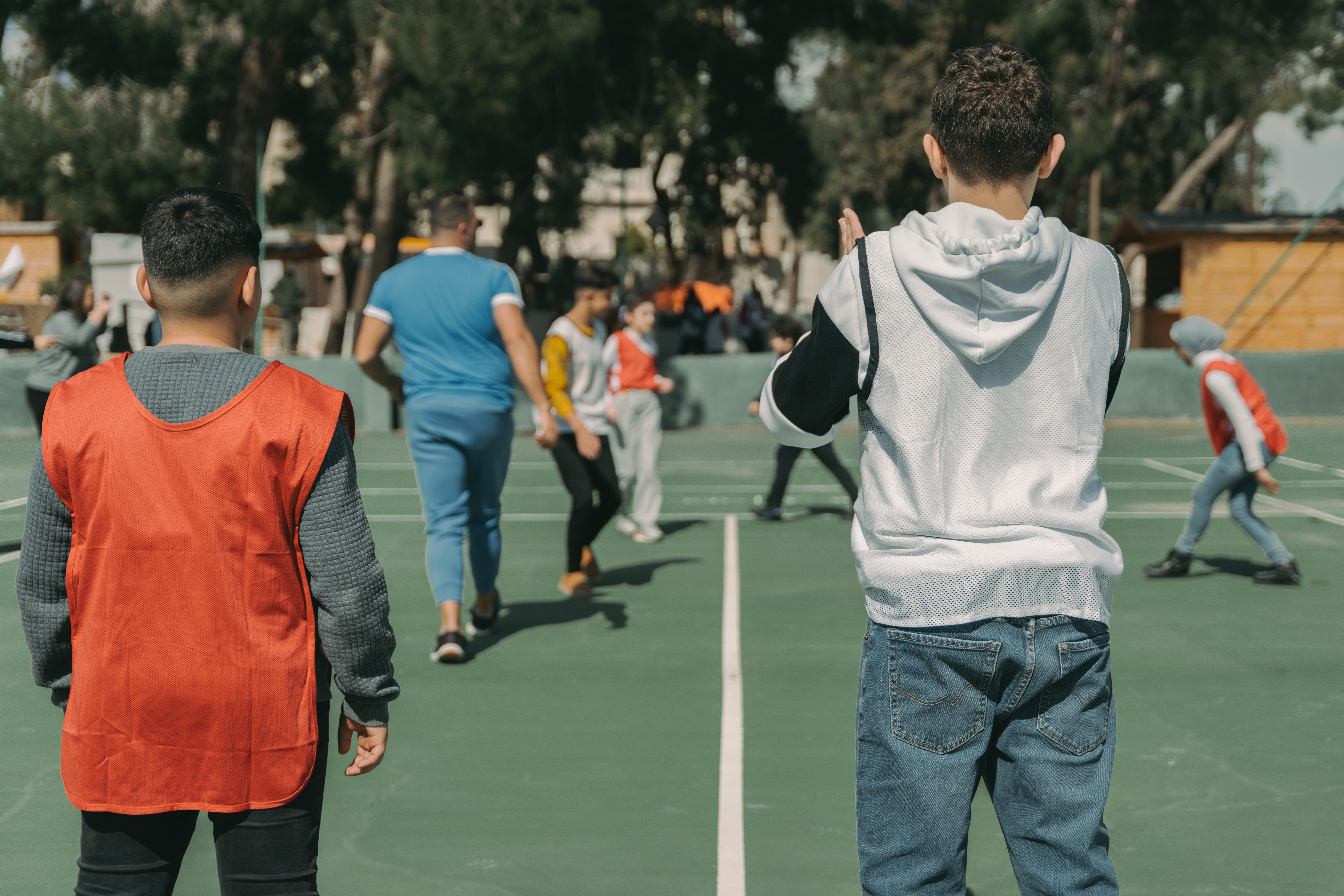
Psychosocial
Foster confidence, initiative and team spirit.
Participants
The « Sport for All » network primarily targets those furthest from sports practice, particularly women, people with disabilities and refugees. More broadly, it concerns people facing vulnerability in accessing their economic and social rights.
Particular attention is paid to issues of gender, disability and exile, in order to remove the structural barriers to accessing sports activities. In exile contexts, the project also supports communities deprived of their fundamental rights in reclaiming their bodies and space.
Young people hold a central place in the network. As priority targets, they are involved in defining objectives and activities through consultation processes, and fully involved in their implementation.
Our activities
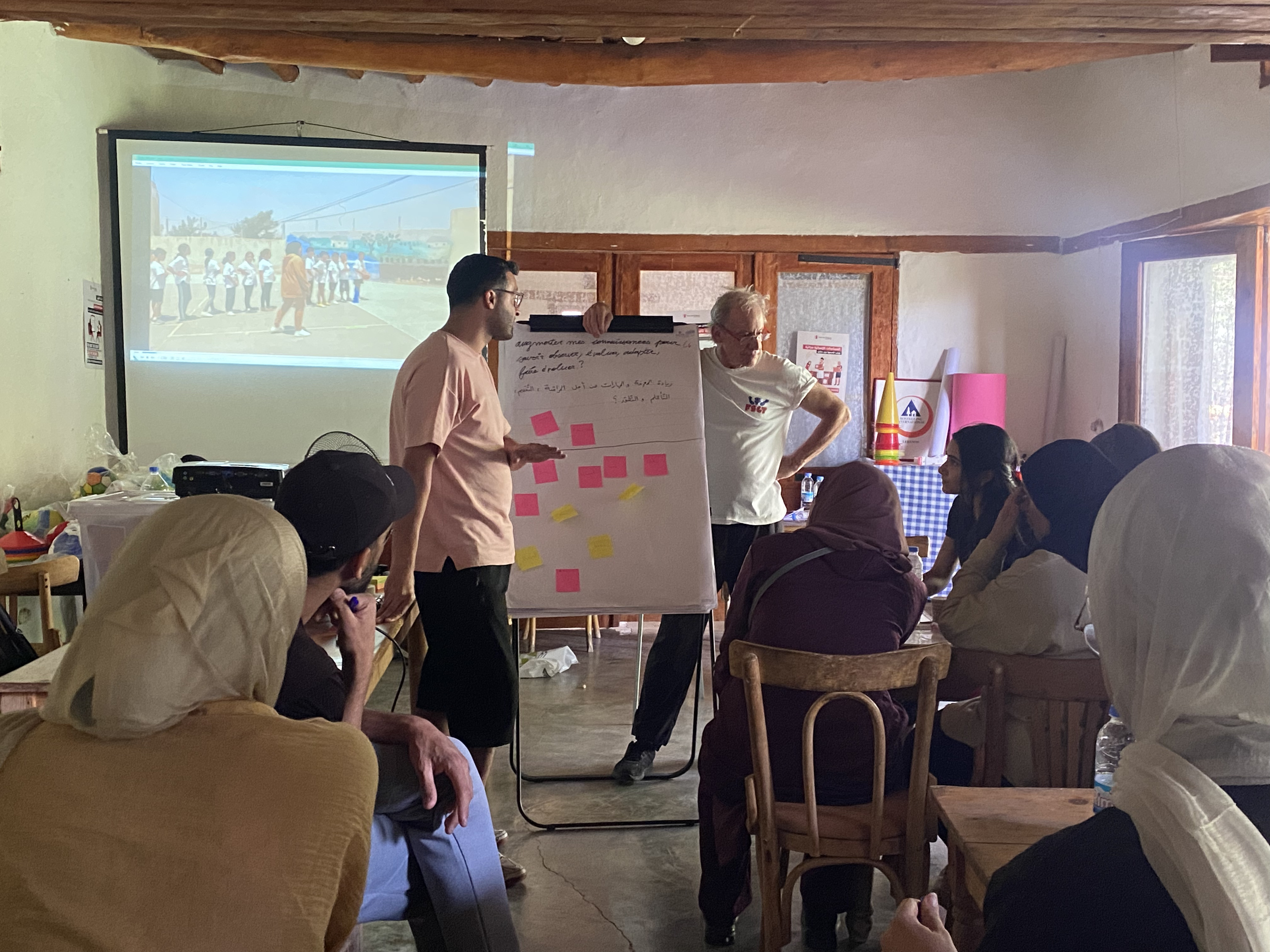
Annual training programme
Each year, a training programme is led by volunteer trainers specialised in inclusive and emancipatory sports practices. It is aimed at the groups of facilitators from each local organisation and is complemented by follow-up sessions between trainers and facilitators.
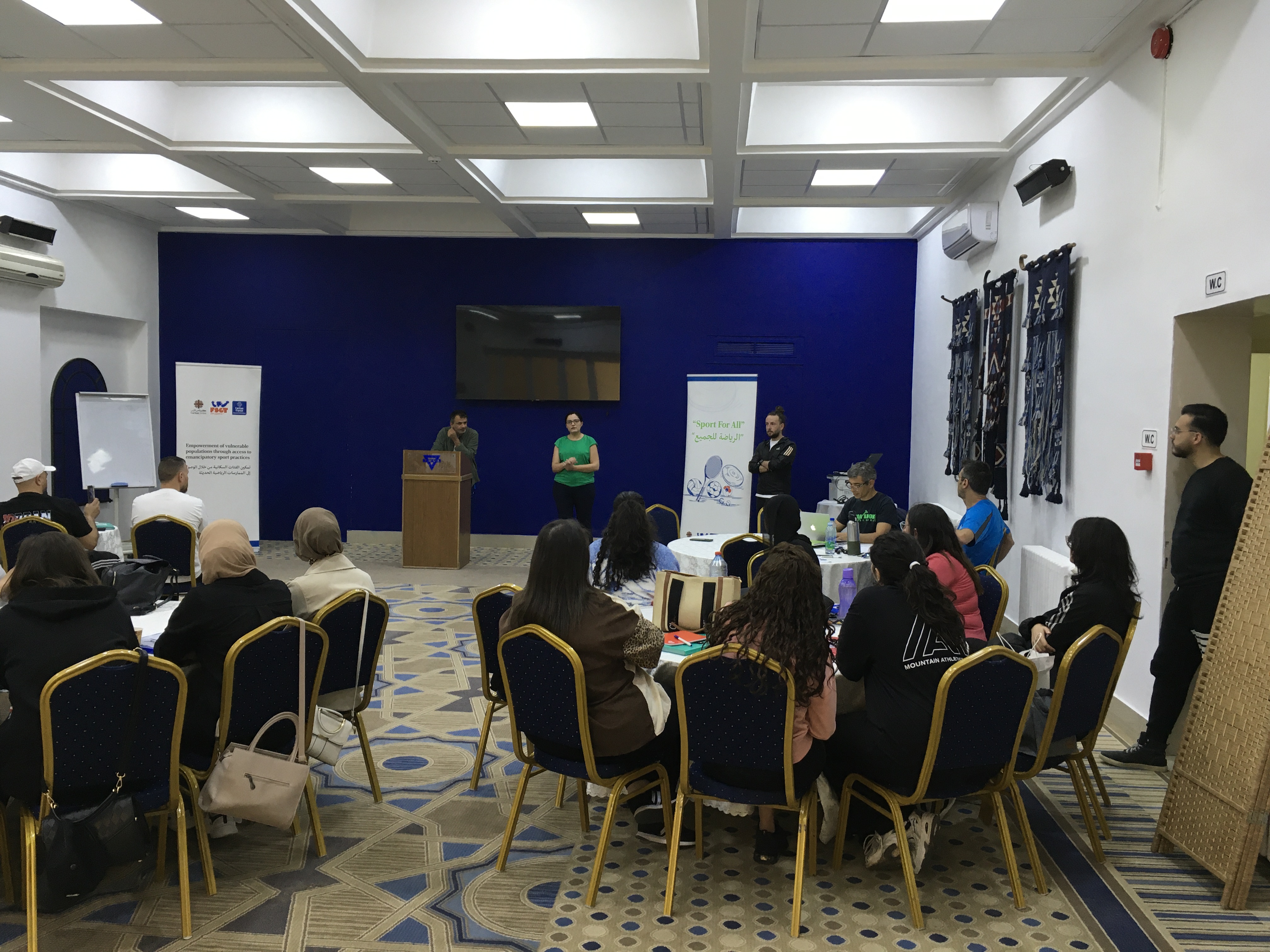
Collective exchange and learning
A shared strategy of experience-sharing and knowledge capitalisation is established between the network's organisations. An annual seminar allows participants to share implementation experiences, the difficulties encountered and the adaptations developed, while cross-organisation trainings strengthen collective learning.

Pilot projects
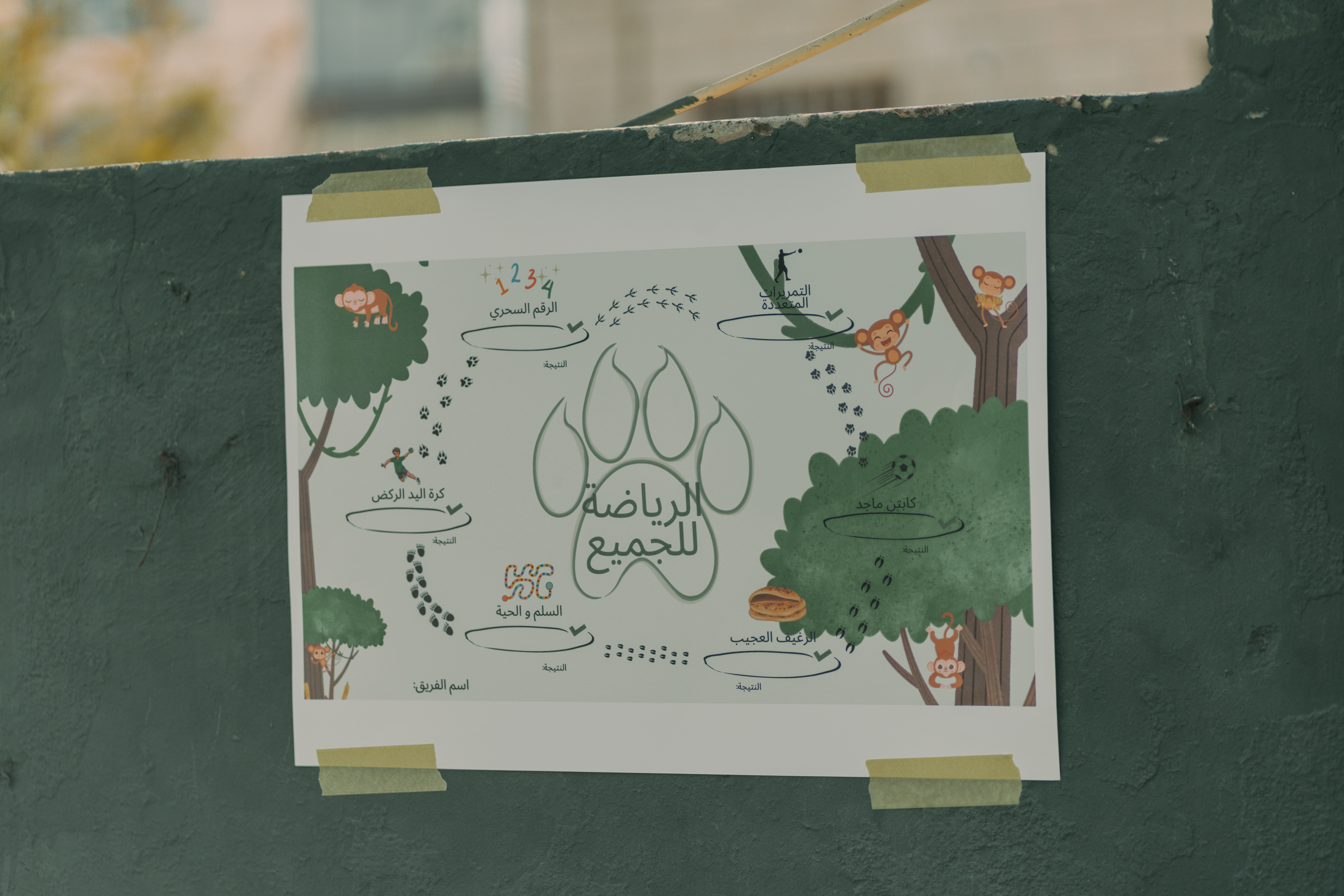
In each territory, cycles of sports activities are carried out primarily for women, people with disabilities and refugees. The formats, rhythms and activities evolve according to the people present and the context of each territory.
Popular sport caravans
Each year in France, the “Popular Sport Caravans” help spread these practices through exchanges and sports activities, with the participation of the network's local organisations. They are an opportunity to build concrete links between territories and to bring the project's international dimension to life.
Cross-cutting approaches
Gender, disability, exile and youth structure the entire intervention and correspond to the main barriers to accessing sports practice.
Gender
Gender inequalities limit women's and girls' access to sports spaces. The project aims to remove these barriers by encouraging their participation and creating spaces where they can fully take their place.
Disability
The network's approach does not start from predefined inclusive rules or activities, but from the people themselves: their abilities, their desires, the way they wish to participate. Rules and formats are built with them, not for them, in order to create truly accessible and inclusive sports practices.
Exile
Situations of exile deeply weaken social ties and the capacity to act. In Gaza, Lebanon and Egypt, communities face destruction, precariousness and isolation. The project draws on their own resources and knowledge to support the reappropriation of the body, of space and of the collective.
Youth
Young people hold a central place in the network, both as members of their communities and actors of their transformation. They lead activities on the ground, relay lived realities and take part in national and international seminars, where their experience directly shapes the network's collective orientations.